Timber Harvesting Services
Cherry Creek Forestry harvests standing timber with a focus on pine and other softwood stands. A well-planned harvest can reduce overcrowding, improve access, remove marketable timber, and give the remaining trees more room for sunlight, water, and nutrients.
The right approach depends on the stand, the terrain, access, equipment movement, landowner goals, and the condition of the trees. That is why the process starts with a property review instead of a one-size-fits-all recommendation.
How a harvest plan moves from stand review to site completion
Stand and Access Review
Walk or review the stand, access points, terrain, wet areas, and likely equipment routes before recommending a harvest approach.
Harvest Method Selection
Choose whether thinning, selective harvesting, or a heavier removal approach makes sense for the timber and landowner goals.
Equipment and Landing Plan
Plan how machinery enters, where wood is processed or staged, and how traffic through the property will be managed.
Harvest and Site Wrap-Up
Complete the harvest with attention to access, remaining stand condition, slash expectations, and final landowner communication.
Methods are selected around the stand, not forced into one template
Softwood and Conifer Thinning
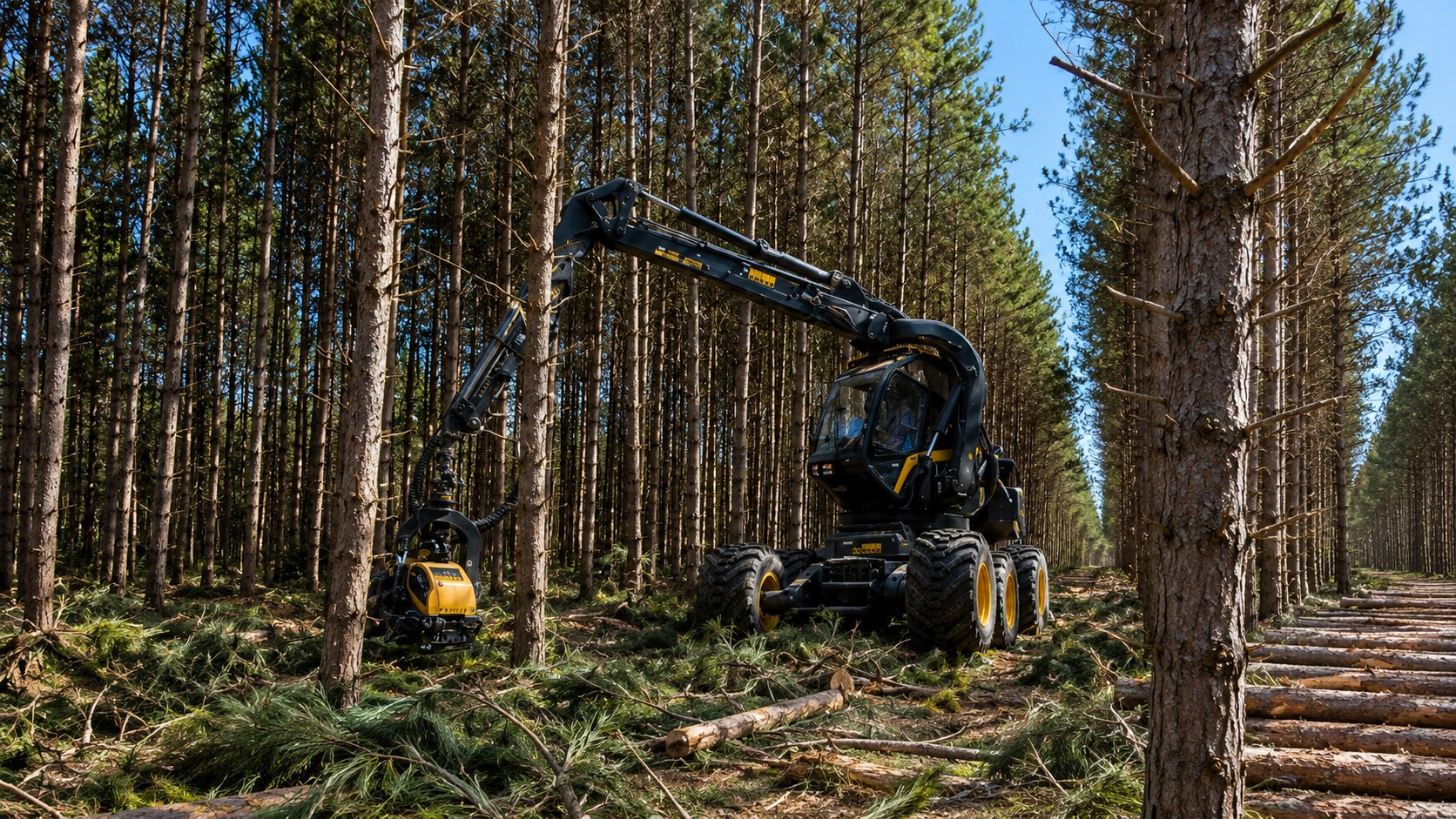
Thinning removes a portion of the standing timber while leaving selected trees to continue growing. In pine rows or dense conifer stands, thinning can reduce competition, open travel lanes, improve equipment access, and support a healthier remaining stand.
- Reduces overcrowding in dense softwood stands.
- Improves growth potential for retained trees.
- Creates better access for future management.
- Can remove suppressed, damaged, or marketable trees depending on the site plan.
Selective Harvesting
Selective harvesting targets specific trees or rows based on value, spacing, access, and the desired condition of the stand after harvest. This method is often preferred when the goal is to keep the property wooded while still capturing timber value.
Cherry Creek Forestry uses the site evaluation to decide how machinery can move through the stand, where processed wood can be staged, and how to protect practical access after the job is complete.
Clearcutting and Land Clearing
Some properties call for more aggressive removal, especially where the landowner has a defined conversion, access, storm damage, disease, or regeneration goal. Clearcutting is not the default recommendation, but it can be appropriate when it matches the property plan.
When full removal is considered, expectations should be clear: boundaries, landing areas, access routes, slash handling, weather limitations, and the intended use of the site after harvest.
Equipment, Access, and Landing Areas
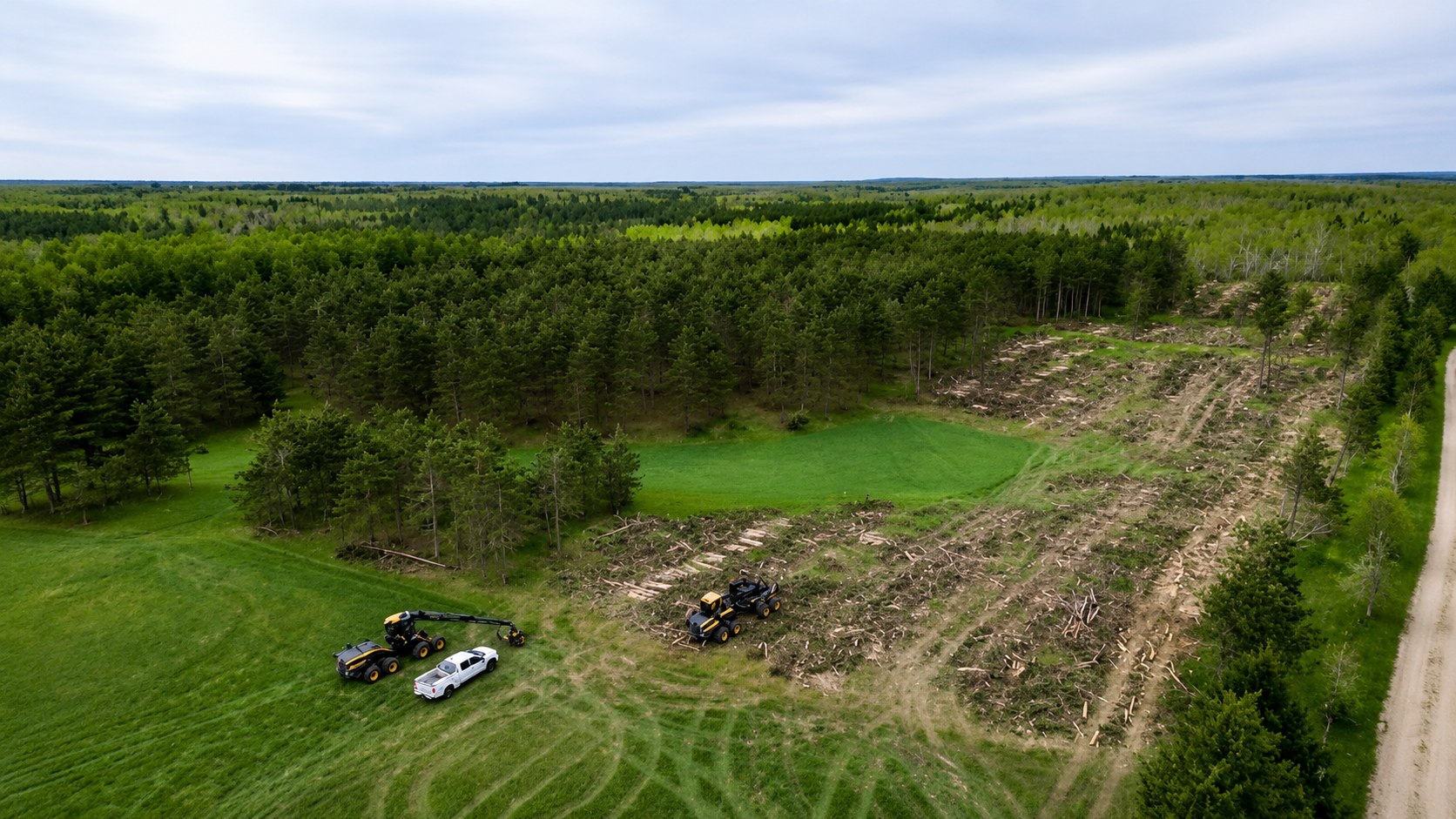
Harvesting is not only about the trees. The work also depends on whether equipment can reach the stand safely and efficiently. Access lanes, slope, soil moisture, nearby structures, utilities, field edges, and staging areas all affect the harvest plan.
During a review, Cherry Creek Forestry looks at where equipment can enter, where logs or processed timber can be staged, and whether seasonal conditions could affect rutting, cleanup, or timing.
Types of Timber Reviewed
The photos and current work profile point strongly toward softwood and conifer harvesting. Exact value depends on the stand, but the most relevant categories include:
What Landowners Should Send First
The fastest way to begin is to submit the property location, approximate acreage, contact information, and a short description of what is on the land. Photos are helpful if available, especially pictures of the stand, access route, field edge, or existing trails.